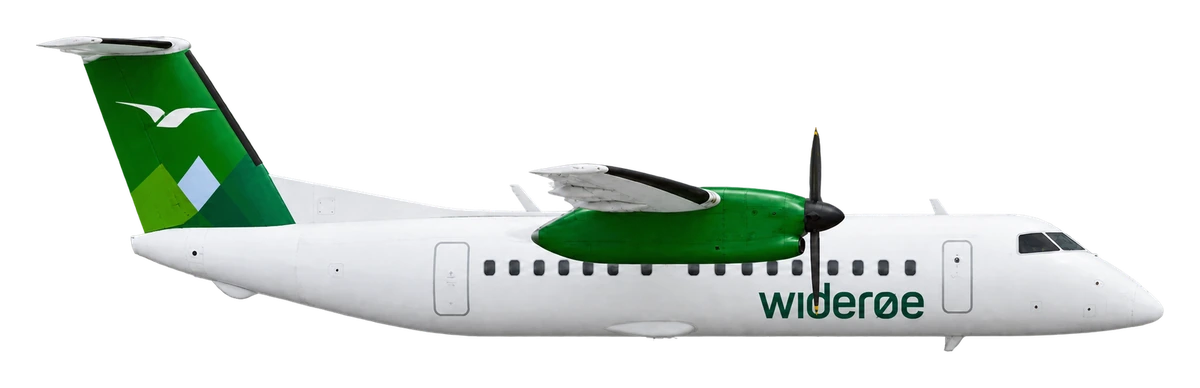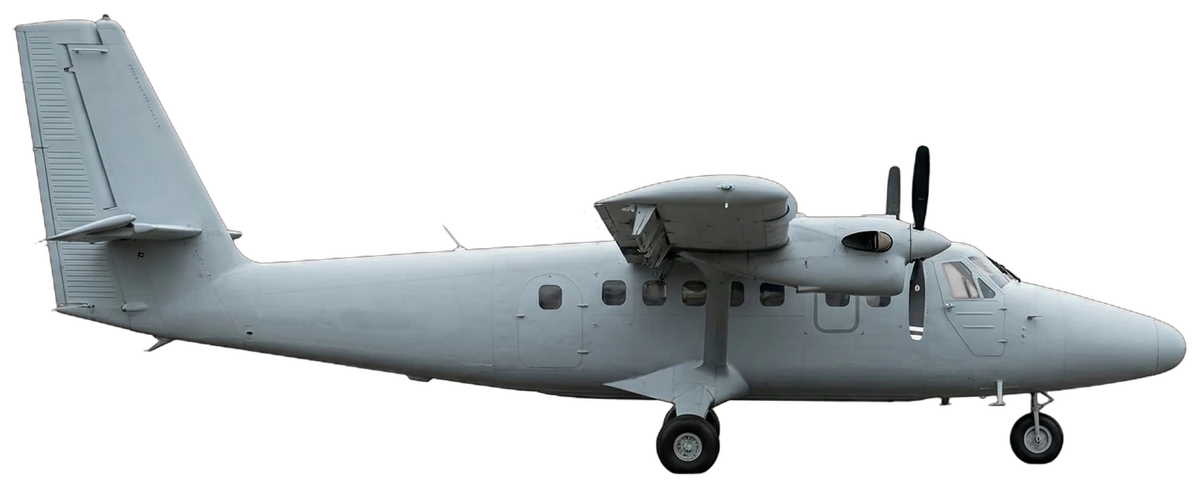
De Havilland Canada Dash 8-100
1 airline colour scheme
Explore the De Havilland Canada Dash 8-100 in side view and top view to compare its silhouette and proportions.
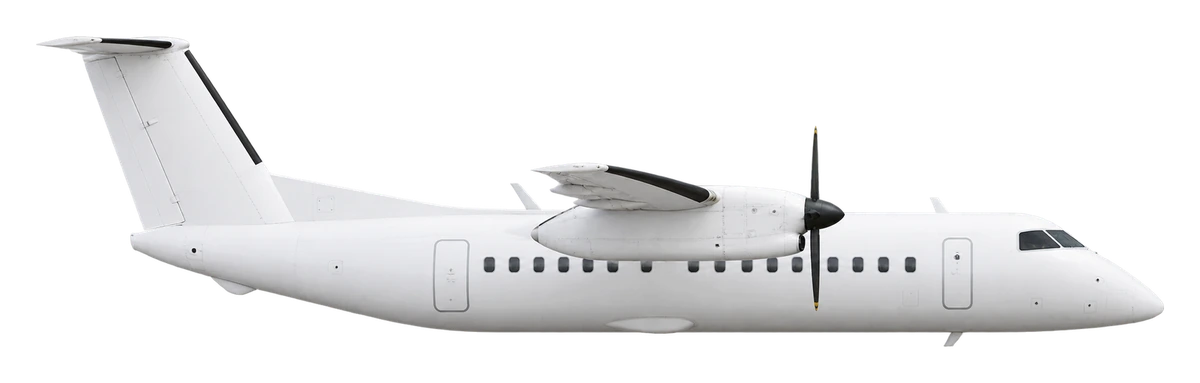
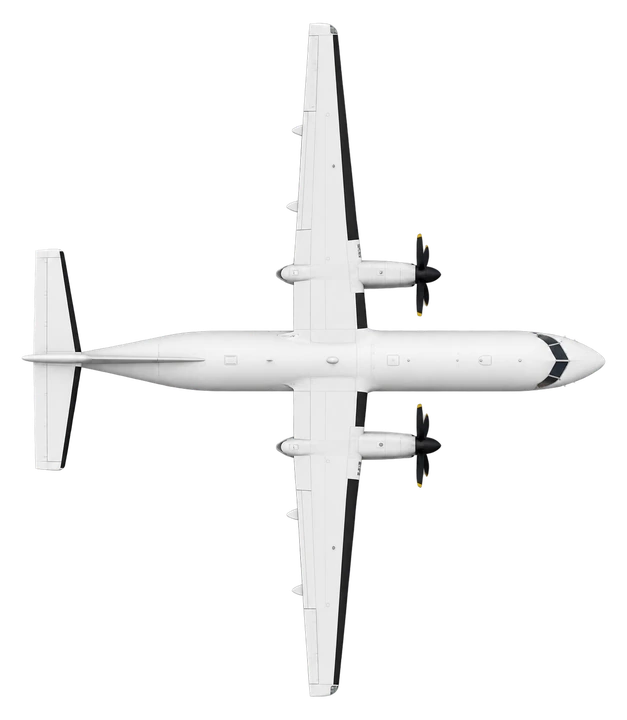
From Wikipedia
The De Havilland Canada DHC-8, commonly known as the Dash 8, is a series of turboprop-powered regional airliners, introduced by de Havilland Canada (DHC) in 1984. DHC was bought by Boeing in 1986, then by Bombardier in 1992, then by Longview Aviation Capital in 2019, which revived the De Havilland Canada brand. Powered by two Pratt & Whitney Canada PW100-series engines, it was developed from the Dash 7 with improved cruise performance and lower operational costs, but without STOL performance. The Dash 8 was offered in four sizes: the initial Series 100 (1984–2005), the more powerful Series 200 (1995–2009) with 37–40 seats, the Series 300 (1989–2009) with 50–56 seats, and Series 400 (1999–2022) with 68–90 seats. The QSeries are post-1997 variants fitted with active noise control systems.
Summary of “De Havilland Canada Dash 8” from Wikipedia, the free encyclopedia, used under CC BY-SA 4.0. Retrieved 2026-10-11.
Download
Free to use, with credit
Use these drawings for anything, commercial too, under Creative Commons Attribution 4.0 International. Credit us like this:
Drawing of the De Havilland Canada Dash 8-100 by AirwayControl Aircraft Library (https://aircraft.intelsystems.ai/aircraft/DH8A/), CC BY 4.0Specifications
- Length
- 22.25 m73 ft
- Wingspan
- 25.89 m84.9 ft
- Max take-off weight
- 15.6 t34,400 lb
- Typical seats
- 37
- Cruise speed
- 499 km/h310 mph
- Max speed
- 448 km/h278 mph
- Range
- 1,889 km1,174 mi
- Ceiling
- 7,620 m25,000 ft
- Engines
- 2× P&WC PW120 (turboprop)
- Power
- 2× 1 800 hp
- First flight
- 1983
- In service
- 1984
From the AirwayControl spec register, curated from Wikipedia and manufacturer pages. Figures vary by variant.