Aérospatiale/BAC Concorde
Historic type, drawn for the library
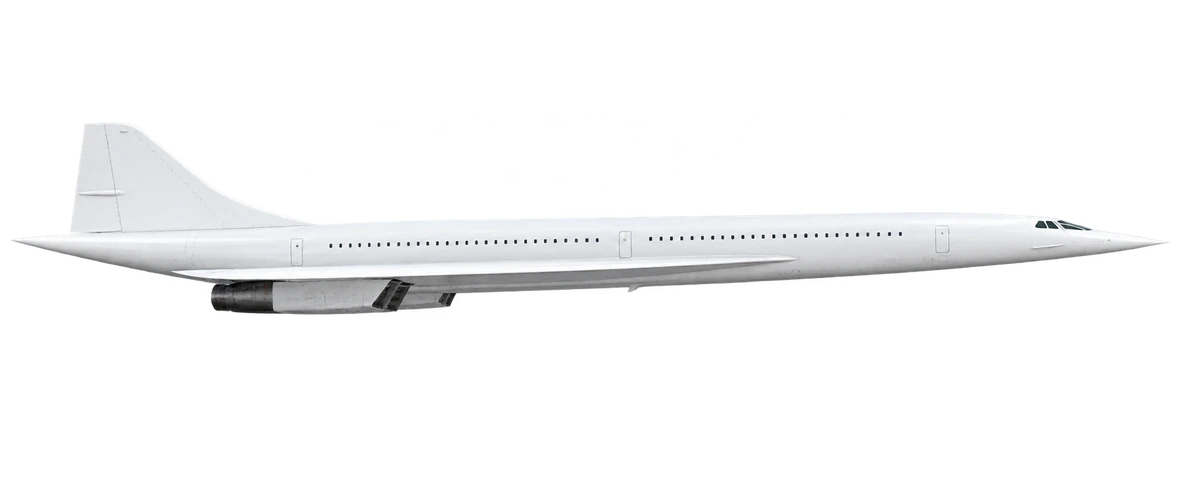
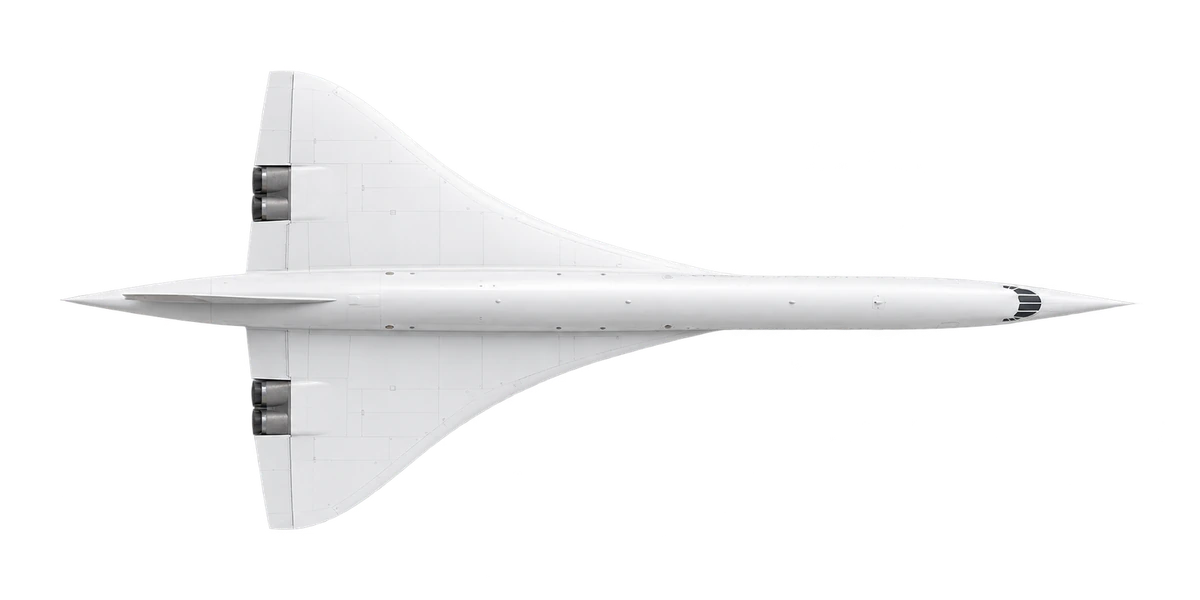
Explore the Aérospatiale/BAC Concorde in side view and top view to compare its silhouette and proportions.
From Wikipedia
Concorde is a retired Anglo-French supersonic airliner jointly developed and manufactured by Sud Aviation and the British Aircraft Corporation (BAC). Studies began in 1954 and a UK–France treaty followed in 1962, as the programme cost was estimated at £70 million . Construction of six prototypes began in February 1965, with the first flight from Toulouse on 2 March 1969. The market forecast was 350 aircraft, with manufacturers receiving up to 100 options from major airlines. On 9 October 1975, it received its French certificate of airworthiness, and was certified by the UK CAA on 5 December.
Summary of “Concorde” from Wikipedia, the free encyclopedia, used under CC BY-SA 4.0. Retrieved 2026-10-11.
Download


Free to use, with credit
Use these drawings for anything, commercial too, under Creative Commons Attribution 4.0 International. Credit us like this:
Drawing of the Aérospatiale/BAC Concorde by AirwayControl Aircraft Library (https://aircraft.intelsystems.ai/aircraft/CONC/), CC BY 4.0Specifications
- Length
- 61.66 m202.3 ft
- Wingspan
- 25.6 m84 ft
- Max take-off weight
- 185 t407,900 lb
- Cruise speed
- 2,158 km/h1,341 mph
- Max speed
- 2,179 km/h1,354 mph
- Range
- 7,223 km4,488 mi
- Ceiling
- 18,300 m60,000 ft
- Engines
- 4× Rolls-Royce/Snecma Olympus 593
- Power
- 169 kN each (w/ reheat)
- First flight
- 1969
- In service
- 1976
From the AirwayControl spec register, curated from Wikipedia and manufacturer pages. Figures vary by variant.